
The Space Between Love and Fear

#StressManagement #SelfCare #SelfNurturing #Wellness #HealthyRelationships #KnowTheSigns #ToxicRelationshipRecovery

As a disclaimer, EnvisionCo Blog is reader-supported. Some links on this site are for additional informational purposes whereas some others are affiliate links (don't worry, these will be clearly marked as such). When you click through an affiliate link on our site and sign-up for a service or finalize a purchase, we may earn affiliate commissions. This of course is at no additional cost to you. Additionally, EnvisionCo Blog is for informational and educational purposes only and is in no way intended to be a substitute for financial advice by a registered certified financial planner, medical advice by a qualified physician, or therapy by a trained mental health professional.
Content NoteThis article discusses domestic violence and intimate partner harm. Please take care while reading and pause if needed. Support resources are included below. |
Domestic violence is not just an argument that got out of hand. It is a deeply entrenched public health crisis that affects millions of people in the United States every year, often quietly and behind closed doors. According to the Centers for Disease Control and Prevention (CDC Stacks), over 1 in 5 women (22.3%) and nearly 1 in 7 men (14.0%) have experienced severe physical violence by an intimate partner at some point in their lifetime, translating to nearly 29 million U.S. women and nearly 16 million U.S. men. (CDC, National Intimate Partner and Sexual Violence Survey).
What often goes unseen is that intimate partner violence is not limited to physical harm. Emotional, psychological, financial, and coercive control are common and deeply impactful. The BMC Public Health article, "Examining the impact of economic abuse on survivors of intimate partner violence: a scoping review," cites that among service seeking samples, approximately 76 to 99% of survivors report experiencing economic abuse, often creating invisible barriers that make leaving feel impossible. For far too many people, domestic violence is not a statistic. It is something they are living with every day.
A Tragedy Close to Home

This reality has been heavy on my mind and heart recently because of a tragedy in our local community. A beloved pastor lost his life in a shooting that has left many grieving, confused, and searching for answers. There has been public speculation that the incident may have stemmed from a domestic dispute involving his wife. At this time, authorities have not confirmed any suspects or made arrests.
In the wake of this loss, the community has felt polarized. Some have rushed to defend the pastor. Others have voiced concern for what may have been happening behind closed doors. Influencers and public figures have taken sides, and emotions have understandably run high. The truth is, none of us truly know what happened that day. What we do know is that domestic violence and toxic relationship dynamics are often the result of deeply unhealthy relational patterns. Patterns that, when left unaddressed, can escalate in devastating ways.
Why I Hesitated to Write This

I want to be transparent about something. I struggled with whether to write this article at all. There has been no shortage of commentary surrounding this tragedy, and I was acutely aware of accusations that some voices are using this story to gain attention or followers. That is not something I want any part of. As a therapist and coach, my intention is not to exploit pain or air out a tragedy for engagement. Which is why I have not named names or spoken of the exact region where this tragedy occurred. What ultimately led me to write this was my deeply rooted commitment to mental wellness education and prevention. If sharing information, language, and resources can help even one person recognize danger sooner, feel less alone, or reach for support before things escalate, then staying silent did not feel right either. This is not about speculation. It is about support.
Why This Conversation Matters

Domestic violence often hides in plain sight. It is minimized, rationalized, or misunderstood as a “bad relationship” rather than a dangerous one. The CDC Intimate Partner Violence Prevention article, "About Intimate Partner Violence," (May 2024) reports that psychological aggression by an intimate partner has affected more than 61 million women and 53 million men in the United States. This same CDC Intimate Partner Violence Prevention article cites data from the Bureau of Justice Statistics stating that approximately one in five homicide victims is killed by an intimate partner, with women disproportionately affected. These are not rare events. They are part of a broader pattern that affects families, faith communities, workplaces, and entire communities.
When Healing Feels Out of Reach

Many people would love counseling or coaching. They know something is wrong. They feel the tension, fear, or confusion long before it turns physical. But the reality is that weekly therapy is not financially accessible for everyone, especially when financial stress or control is already present in the relationship. Still, the need for understanding and support does not disappear. If you have ever had the thought:
“This isn’t okay.”
“Why does this feel so confusing?”
“Why can’t I just walk away?”
You are not broken. Trauma bonds, attachment wounds, and nervous system conditioning are powerful, and they can keep people stuck even when they know something is not right.
A Supportive Resource Worth Knowing About

This is where accessible, trauma-informed education can make a meaningful difference. There is a sensitive and uplifting support course led by Jessica Baum, licensed therapist and author of (affiliate link) Anxiously Attached, was created for individuals navigating toxic and unhealthy relationship dynamics. With more than fifteen years of clinical experience, Jessica specializes in trauma bonds, unhealthy attachment patterns, narcissistic abuse, gaslighting, and the emotional cycles that keep people stuck.
What makes this course especially helpful is that it offers simple, compassionate explanations for why leaving a toxic relationship can feel so physically and emotionally intense. Jessica helps normalize the withdrawal, grief, anxiety, and self-doubt that often follow separation.
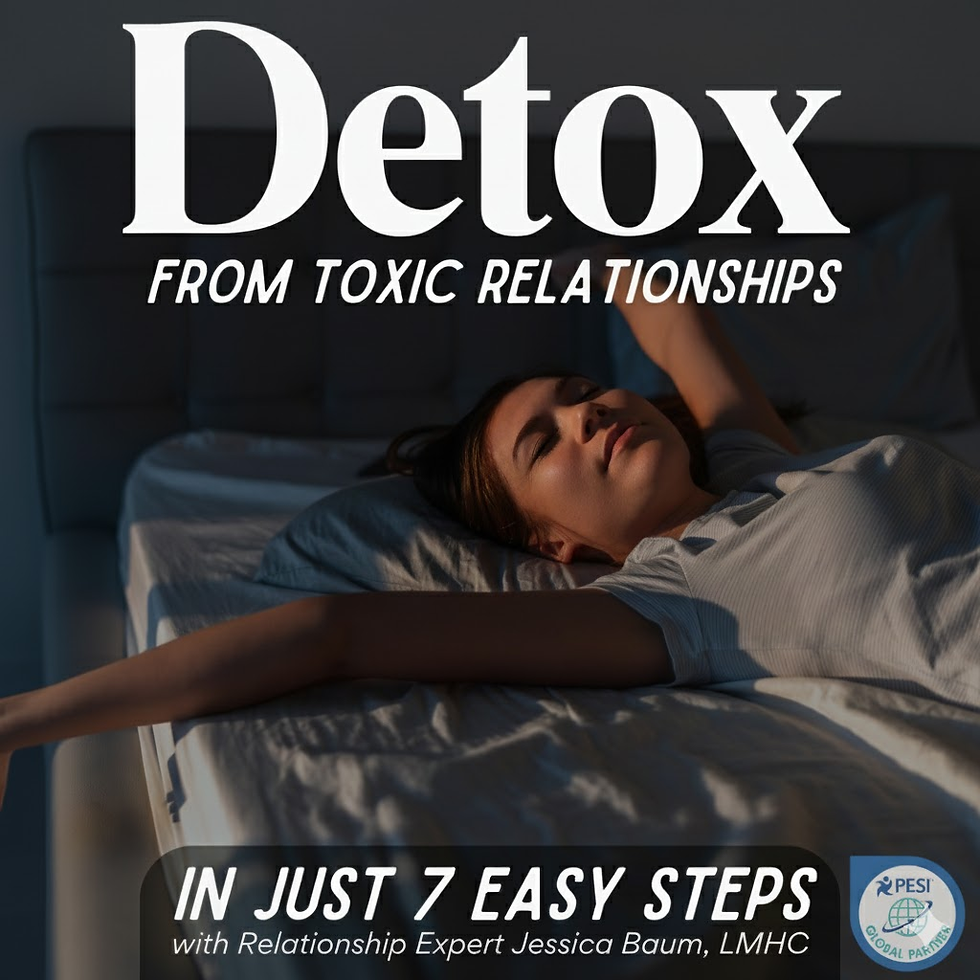
Each on-demand module includes worksheets, exercises, writing prompts, and guided practices. Participants move through seven stages of detoxing from toxic relationships, including:
Recognizing denial and rebuilding clarity
Understanding bargaining as part of grief
Identifying boundary violations and creating non-negotiables
Addressing depression and emotional loss
Discharging anger in safe and empowering ways
Preventing relapse and filling the void after leaving
Healing trauma bonds and core attachment wounds
The course also includes grounding meditations, supportive practices, and a bonus guide focused on protecting yourself from manipulation patterns such as gaslighting, love bombing, ghosting, and hoovering. This is not about blaming yourself. It is about understanding what happened and learning how to protect your future.
A Gentle Invitation
If these words resonate with you, know that you are welcome exactly as you are, with no pressure or expectation. Education can be a gentle first step toward clarity and healing, especially when therapy isn’t immediately accessible. Take what feels supportive, leave what does not, and move at your own pace. Please note that I am an affiliate for this program; should you choose to join via my link, I may earn a commission. I only endorse resources that reflect my professional values and high standards for mental health education.
Course Information
Instructor: Jessica Baum, LMHC
Healing from toxic relationships is not just about leaving. It is about reclaiming yourself, restoring safety in your body, and learning how to choose healthier relationships moving forward. If this article stirred something in you, trust that awareness itself matters. Information can be protective. Support can change the trajectory of a life. You deserve safety. You deserve clarity. You deserve love that does not harm. Please remember, as you begin this wellness journey, do not worry about getting it perfect; just get it going. Until next time. Happy reading! Stay safe!
If You or Someone You Love Needs Immediate Support |
If you are experiencing domestic violence or feel unsafe in your relationship, confidential help is available 24 hours a day. National Domestic Violence Hotline Call: 1-800-799-SAFE (7233) TTY: 1-800-787-3224 Text: START to 88788 Website: thehotline.org |
“When we deny the story, it defines us. When we own the story, we can write a brave new ending.” ~Brené Brown
Here at EnvisionCo Blog, we try to keep ads to a minimum making our blog entirely reader-supported. We may feature links on this site for additional informational purposes. From time to time, we may feature other links which are affiliate links (and these will be clearly marked). When you click through an affiliate link on our site and sign up for a service or finalize a purchase, we may earn affiliate commissions. This is of course at no additional cost to you. However, if you like what you see and would like to make a donation to help us keep ads to a minimum, we would greatly appreciate it! Nothing fancy. We accept the price of a cup coffee with as much gratitude as we would the price of a tank of gas!


This article sheds important light on often overlooked forms of abuse. Awareness and early support are crucial to preventing escalation. heartopia map